
Carthage: Memory and Myth
How did the idea of Carthage live on after its defeat?

This is the third and final post on Carthage! If you missed the previous two, check them out: Glimpses of Carthage and Carthage After Carthage.
As far as speeches by scorned lovers go, Dido’s is a doozy.
In Vergil’s Aeneid, the Carthaginian queen is visited by Aeneas, whose descendants would go on to found Rome. With Cupid's help, Aeneas makes Dido fall in love with him. The couple has a great relationship — until Aeneas remembers that he has a destiny somewhere else, and resolves to leave. Then Dido lays into Aeneas with everything she’s got:
Deceiver, your mother was no goddess…
Did he groan at my weeping? Did he look at me?
Did he shed tears in defeat, or pity his lover?
What is there to say after this? …
Nowhere is truth safe. I welcomed him as a castaway on the shore,
a beggar, and foolishly gave away a part of my kingdom:
I saved his lost fleet, and his friends from death…
I do not hold you back, or refute your words:
go, seek Italy on the winds, find your kingdom over the waves.
Yet if the virtuous gods have power, I hope that you
will drain the cup of suffering among the reefs, and call out Dido’s
name again and again. Absent, I’ll follow you with dark fires,
and when icy death has divided my soul and body, my ghost
will be present everywhere. Cruel one, you’ll be punished.
I’ll hear of it: that news will reach me in the depths of Hades.”
After Aeneas departs, Dido curses him further:
Couldn’t I have seized hold of him, torn his body apart,
and scattered him on the waves? And put his friends to the sword,
and Ascanius even, to feast on, as a course at his father’s table?…
[L]et him beg help, and watch the shameful death of his people:
then, when he has surrendered, to a peace without justice,
may he not enjoy his kingdom or the days he longed for,
but let him die before his time, and lie unburied on the sand.
This I pray, these last words I pour out with my blood.
Then, O Tyrians, pursue my hatred against his whole line
and the race to come, and offer it as a tribute to my ashes.
Let there be no love or treaties between our peoples.
Rise, some unknown avenger, from my dust, who will pursue
the Trojan colonists with fire and sword, now, or in time
to come, whenever the strength is granted him.
I pray that shore be opposed to shore, water to wave,
weapon to weapon: let them fight, them and their descendants.
Then Dido stabs herself with Aeneas’s sword; Aeneas sees the fire from her funeral fading into the distance as he sails away.
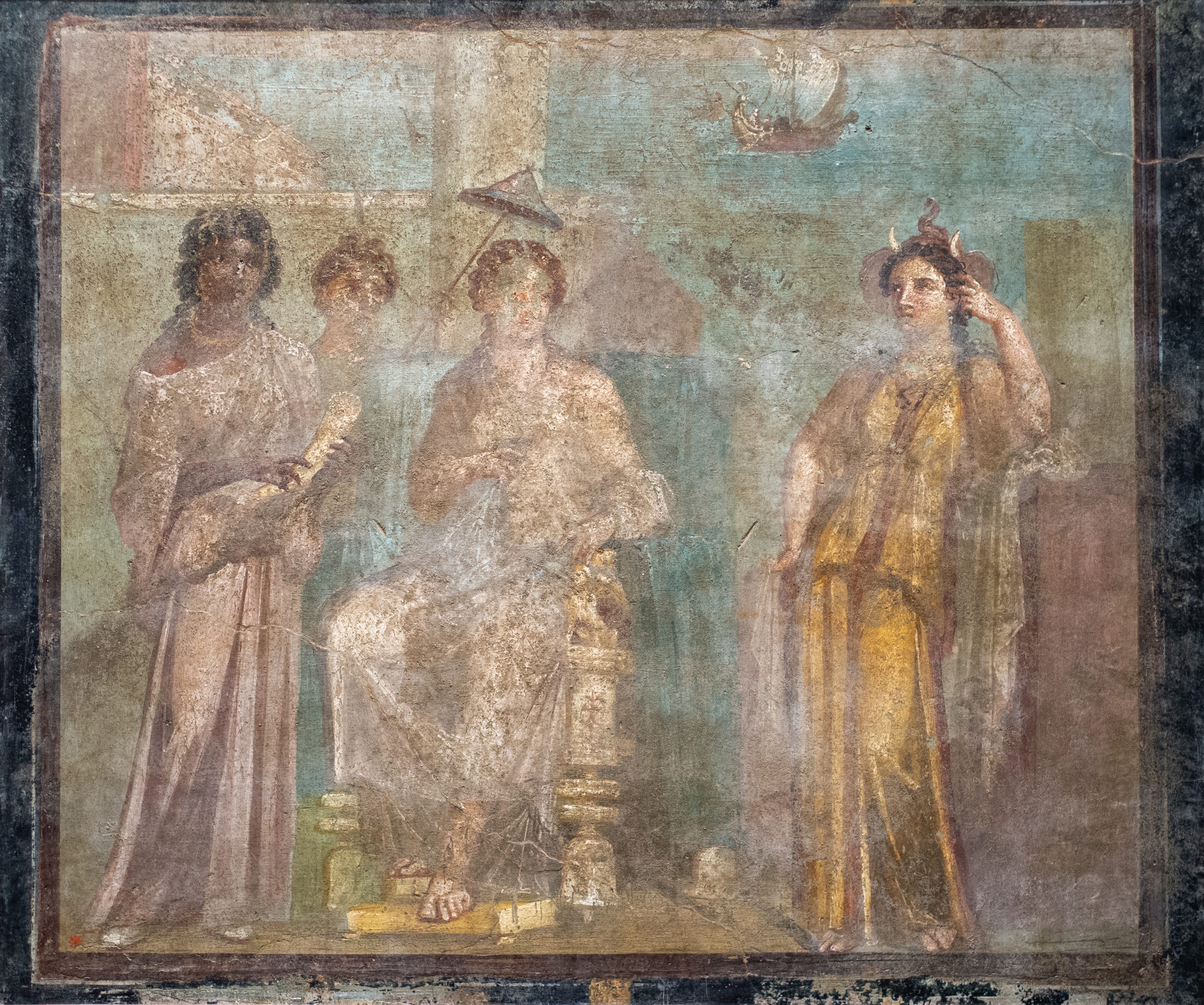
It’s certainly a dramatic story, and it’s one that echoed across the centuries. Dido pops up all over the place in Roman art and literature. Here she is, just after Aeneas abandons her, in a painting on a Pompeii wall:
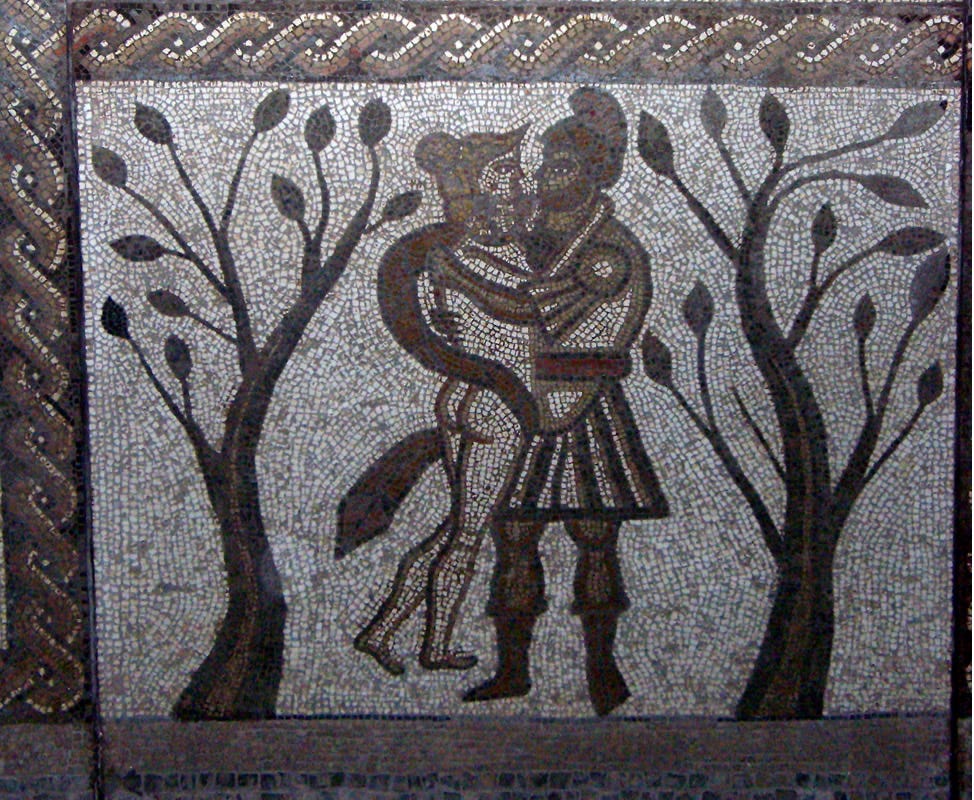
This mosaic captures a happier time, with Dido and Aeneas in an embrace:
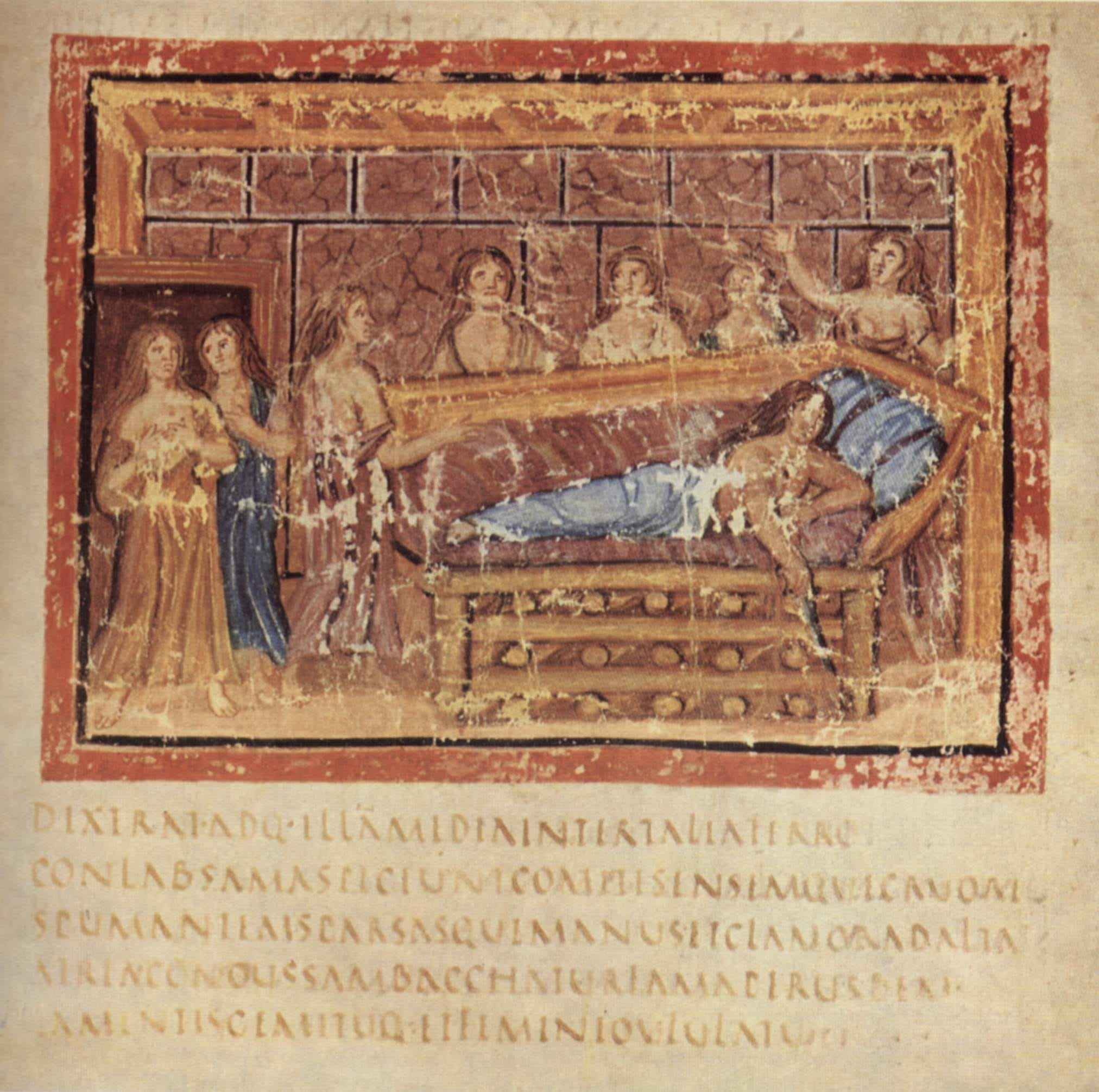
And here’s a later painting from the 400s CE of her on the funeral pyre:
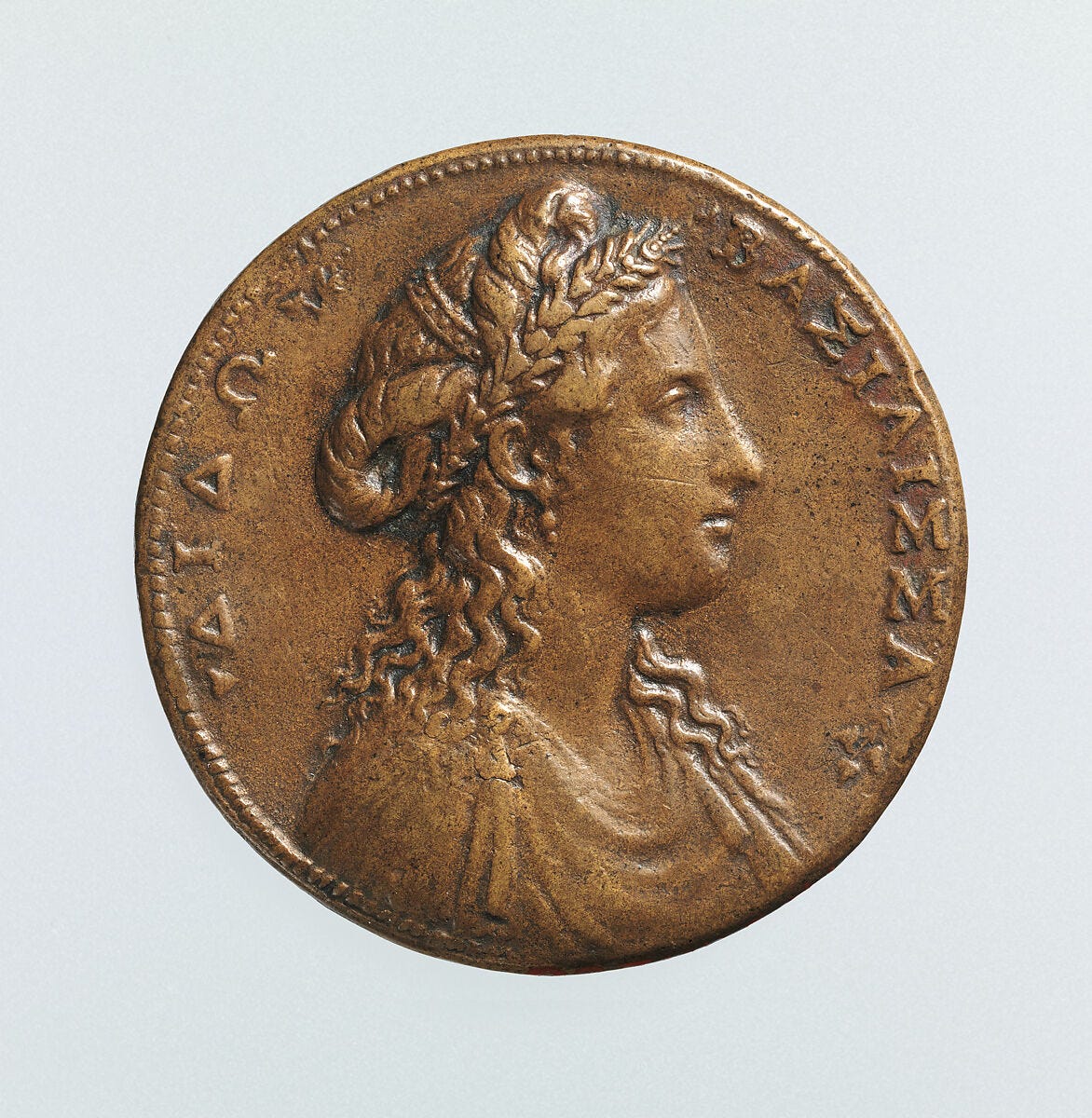
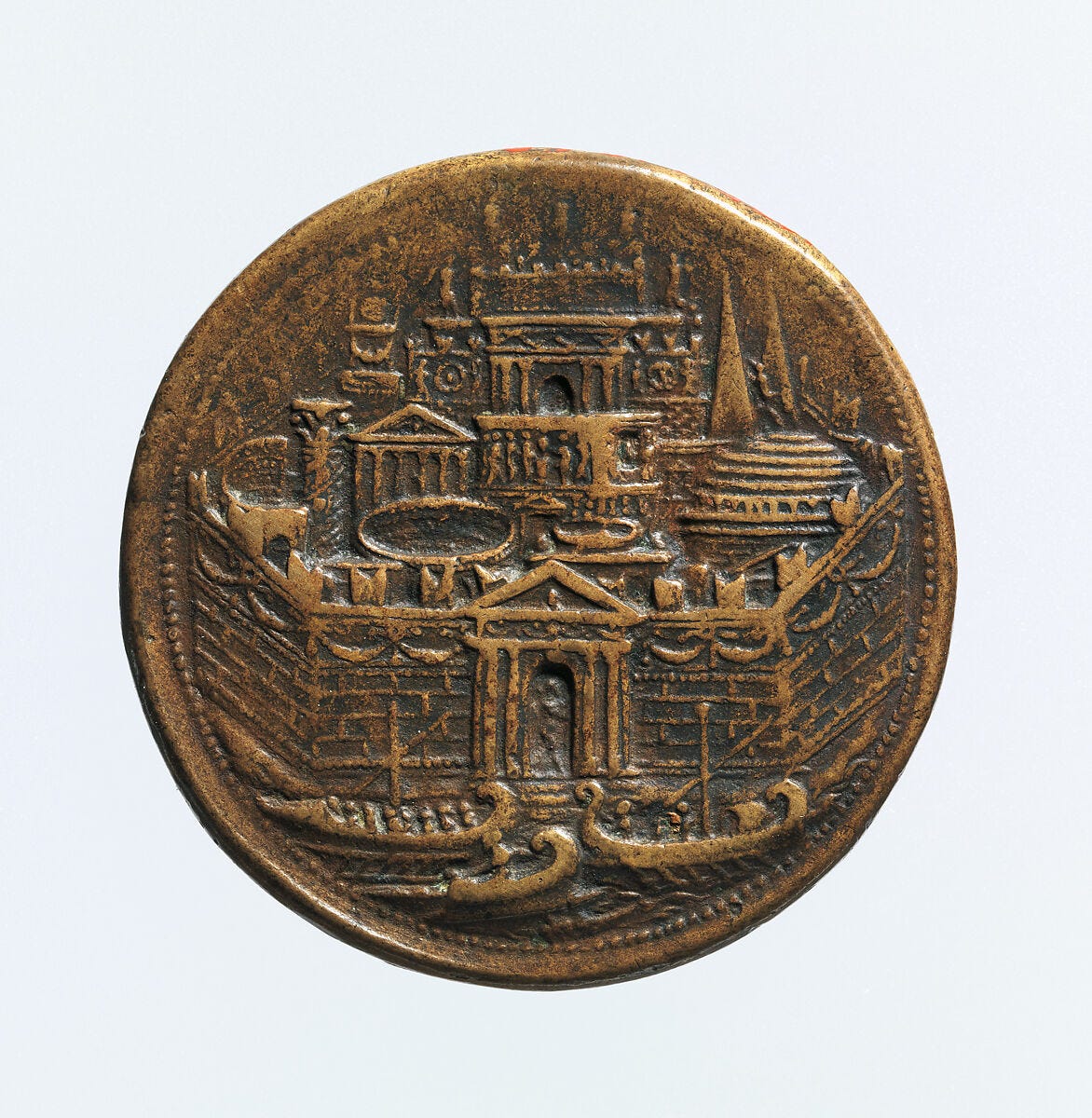
Later artists were clearly fascinated by Dido, too. She was featured on this medal, made in 1550:
Which featured an artist’s rendering of ancient Carthage on the back:
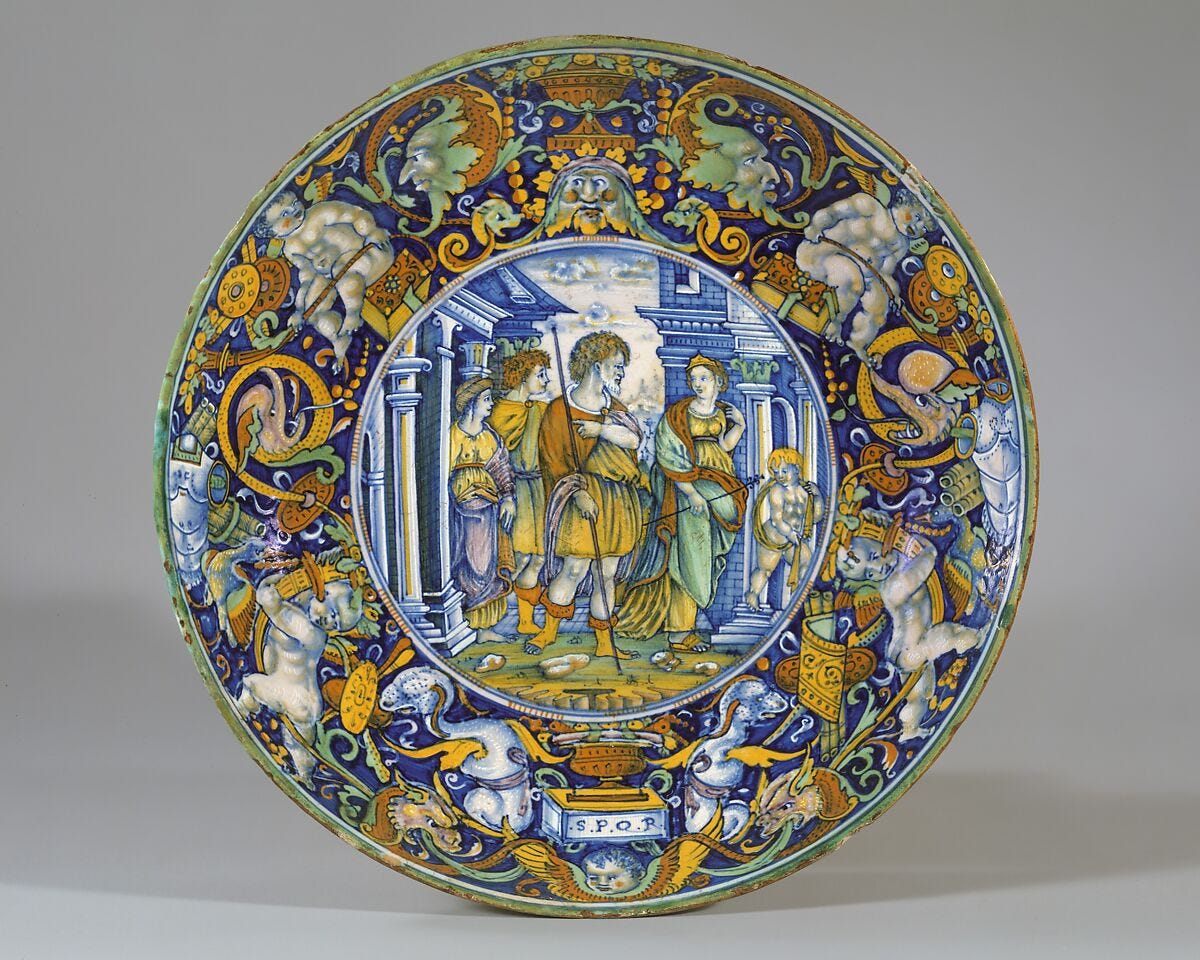
This 16th-century plate depicts Aeneas meeting Dido for the first time:
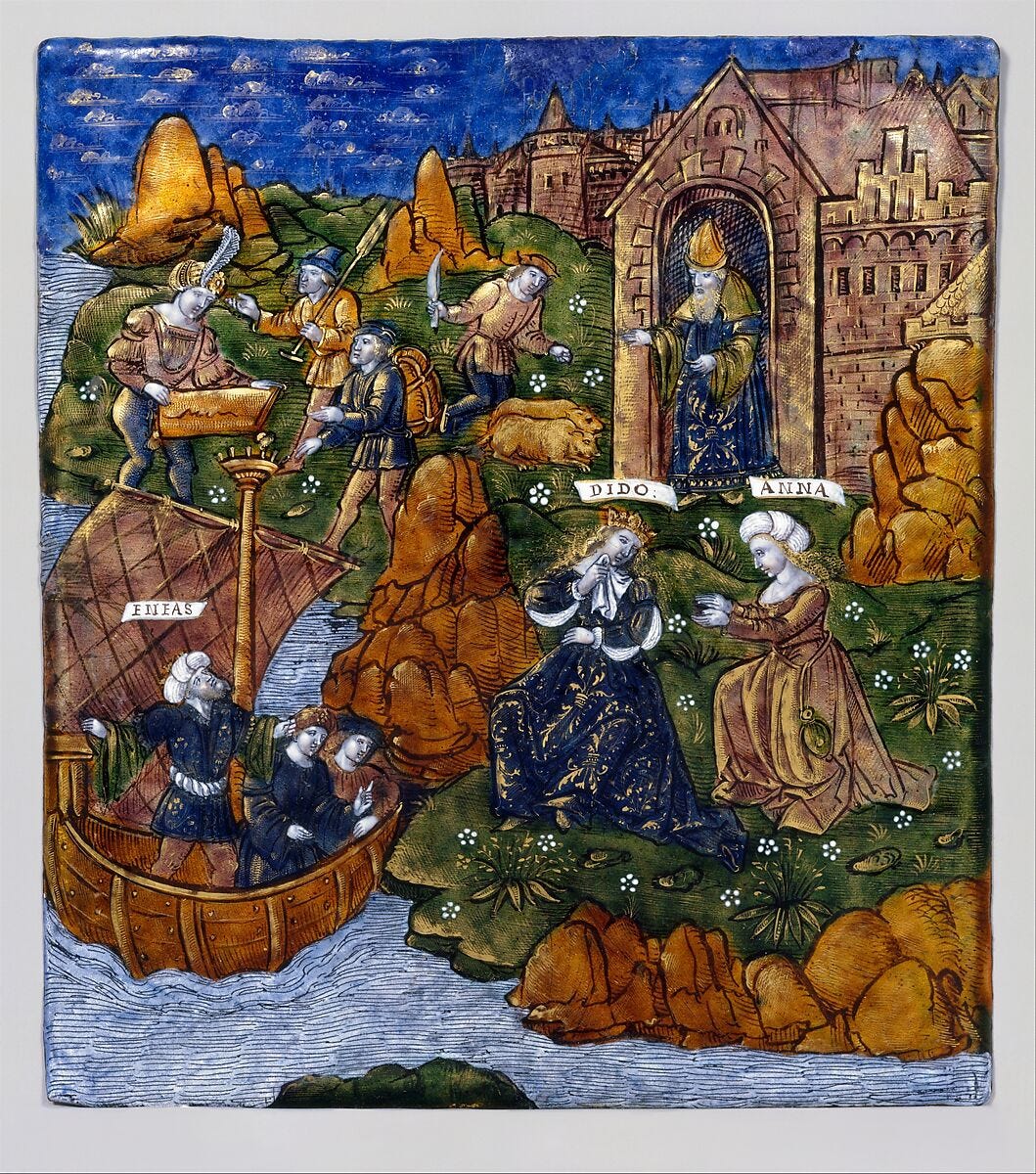
And this enamel, made around the same time, shows Dido on the shore watching Aeneas sail away:
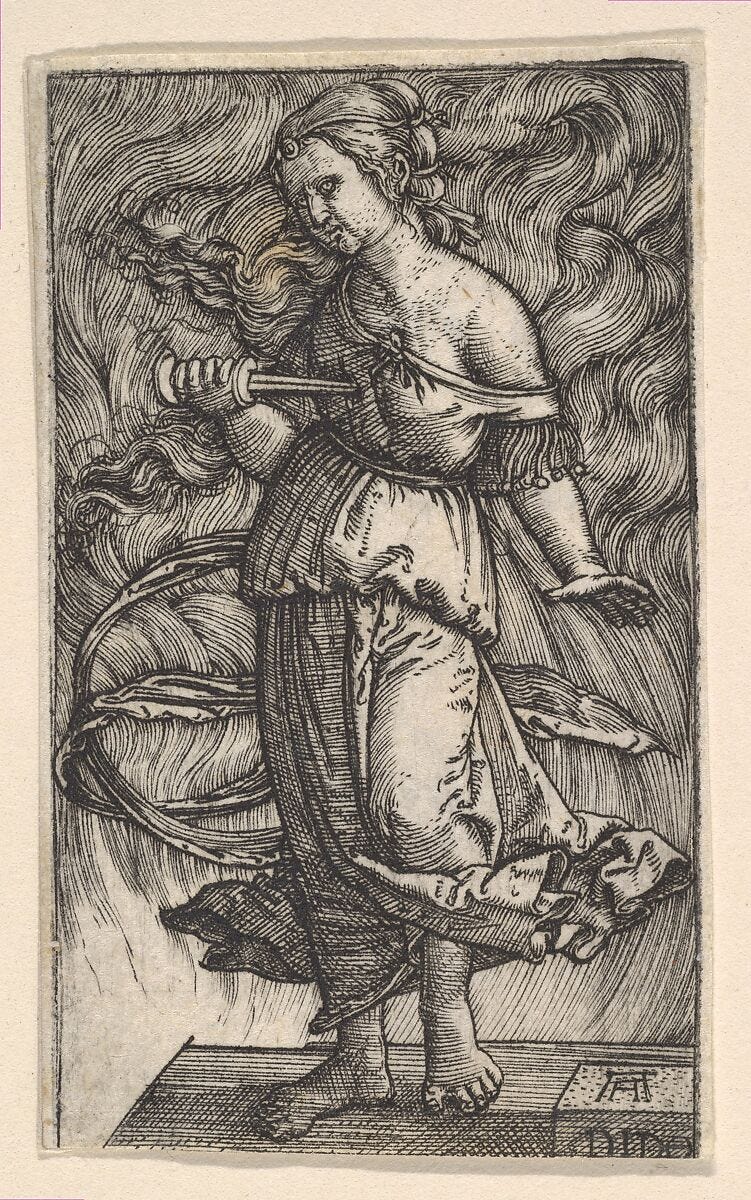
But it’s the suicide of a jilted woman that seems to have really inspired artists, from this German engraving from around 1500:
Or this Italian drawing from the 1600s:
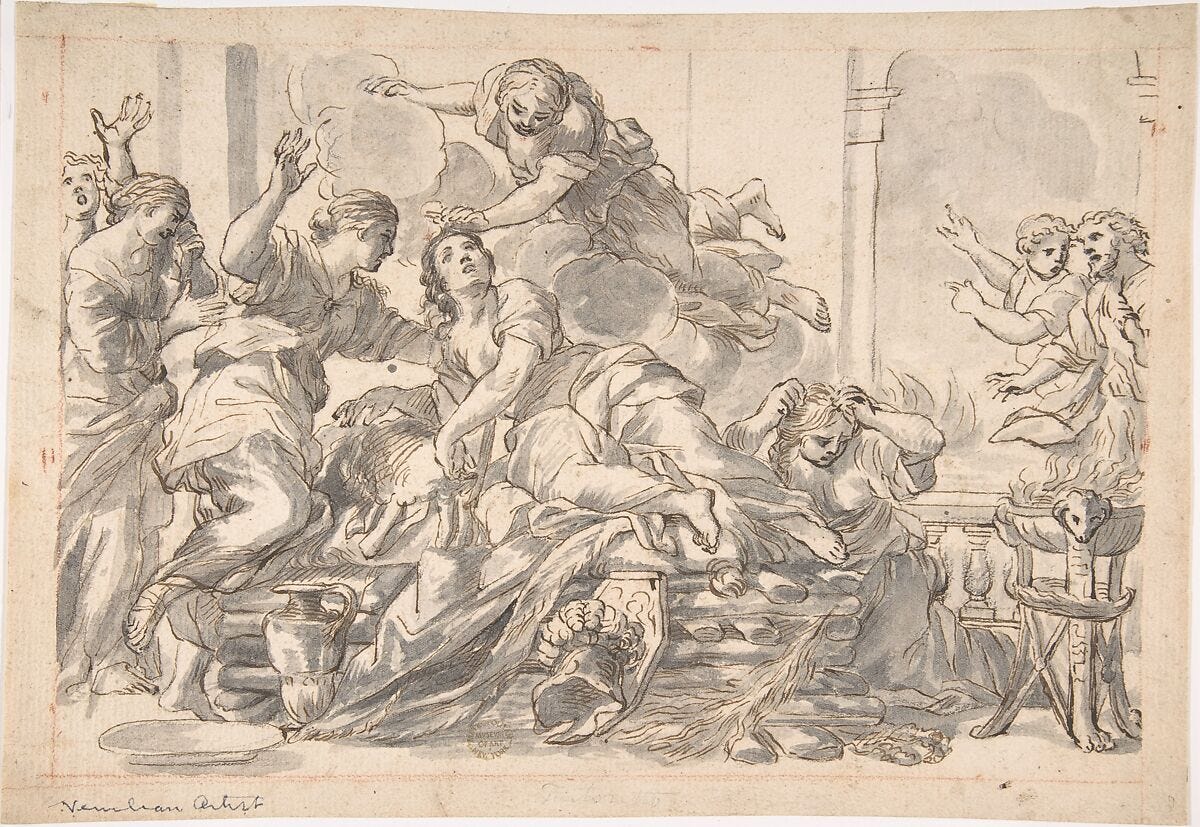
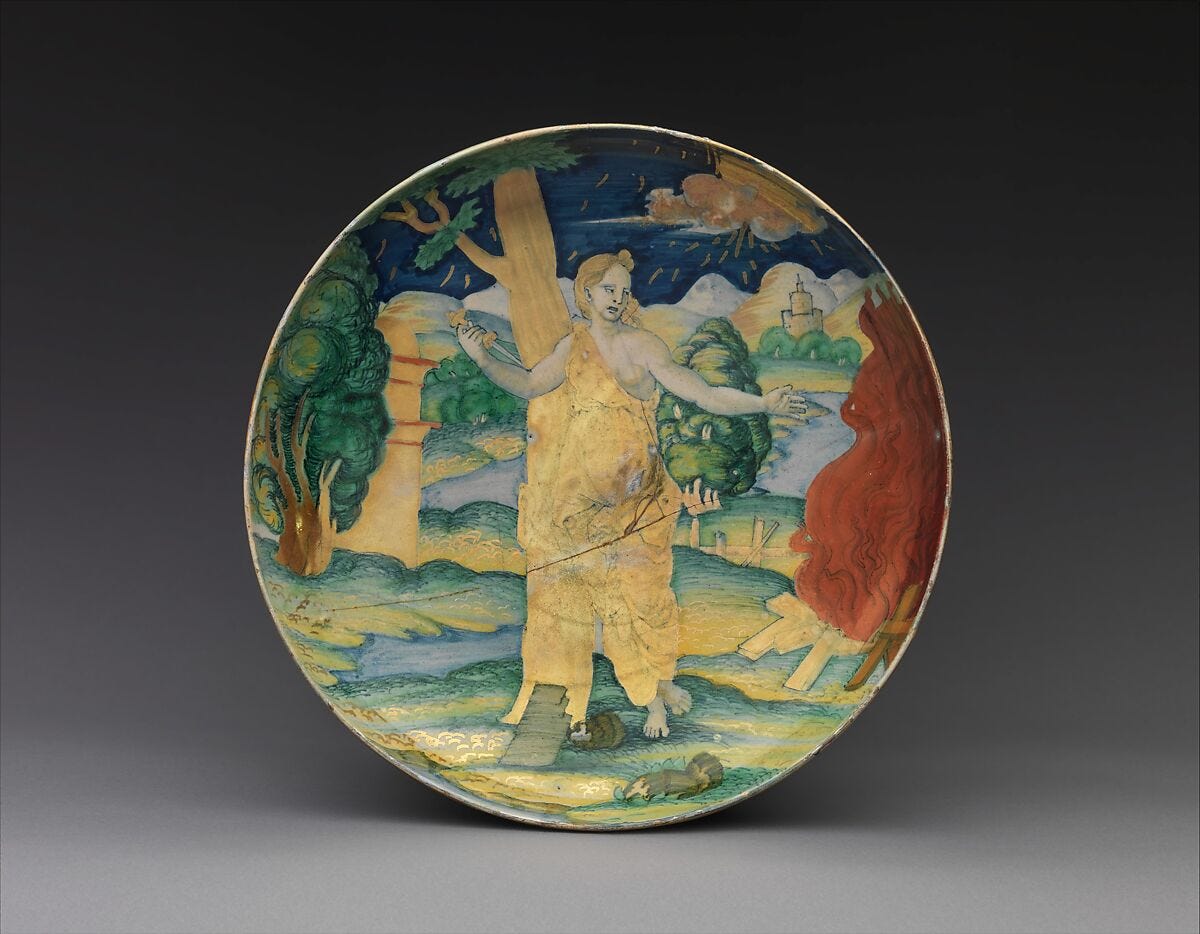
One might eat from a bowl featuring Dido’s death:
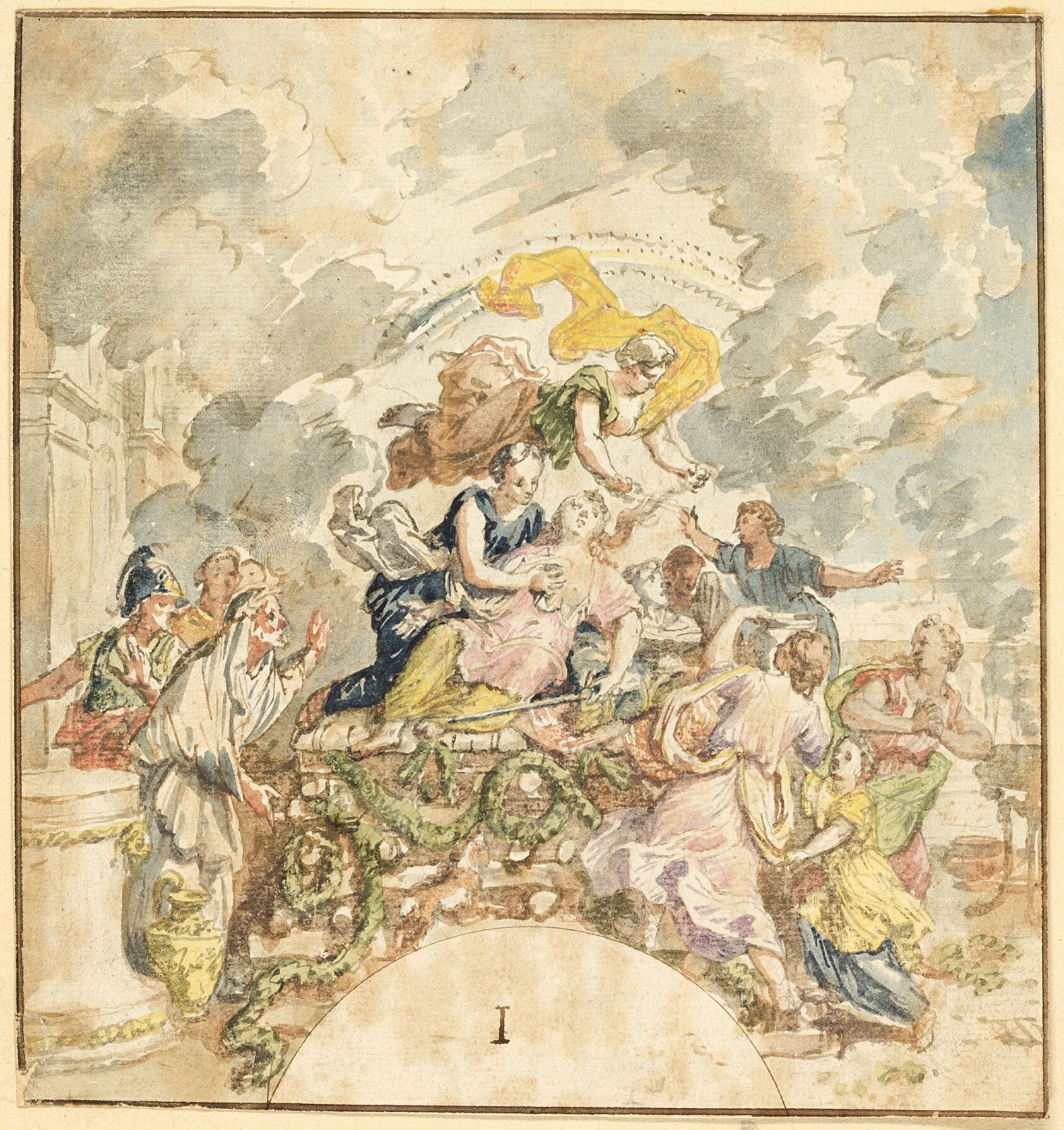
Look at a brightly-colored watercolor of the event:
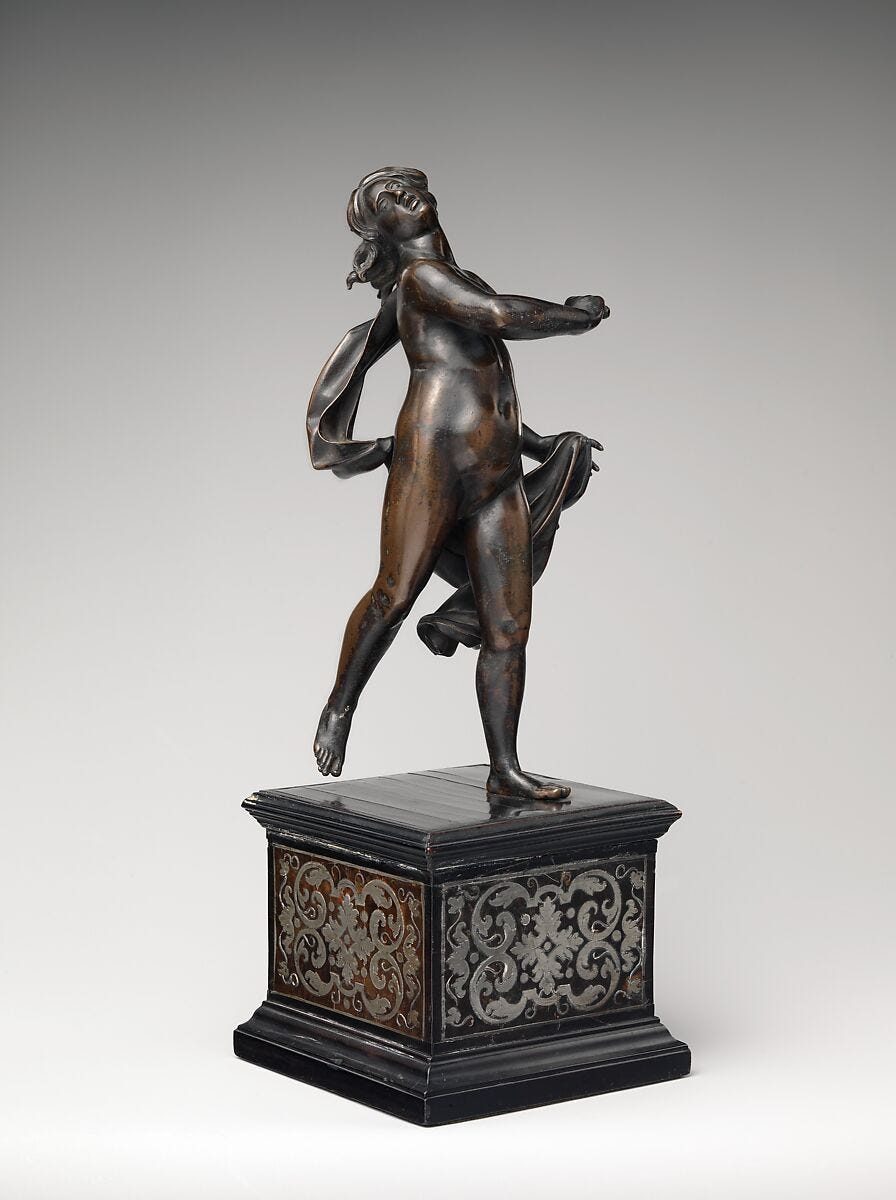
Gaze upon a dramatic, stately bronze rendering:
Or witness it through a dreamlike haze:
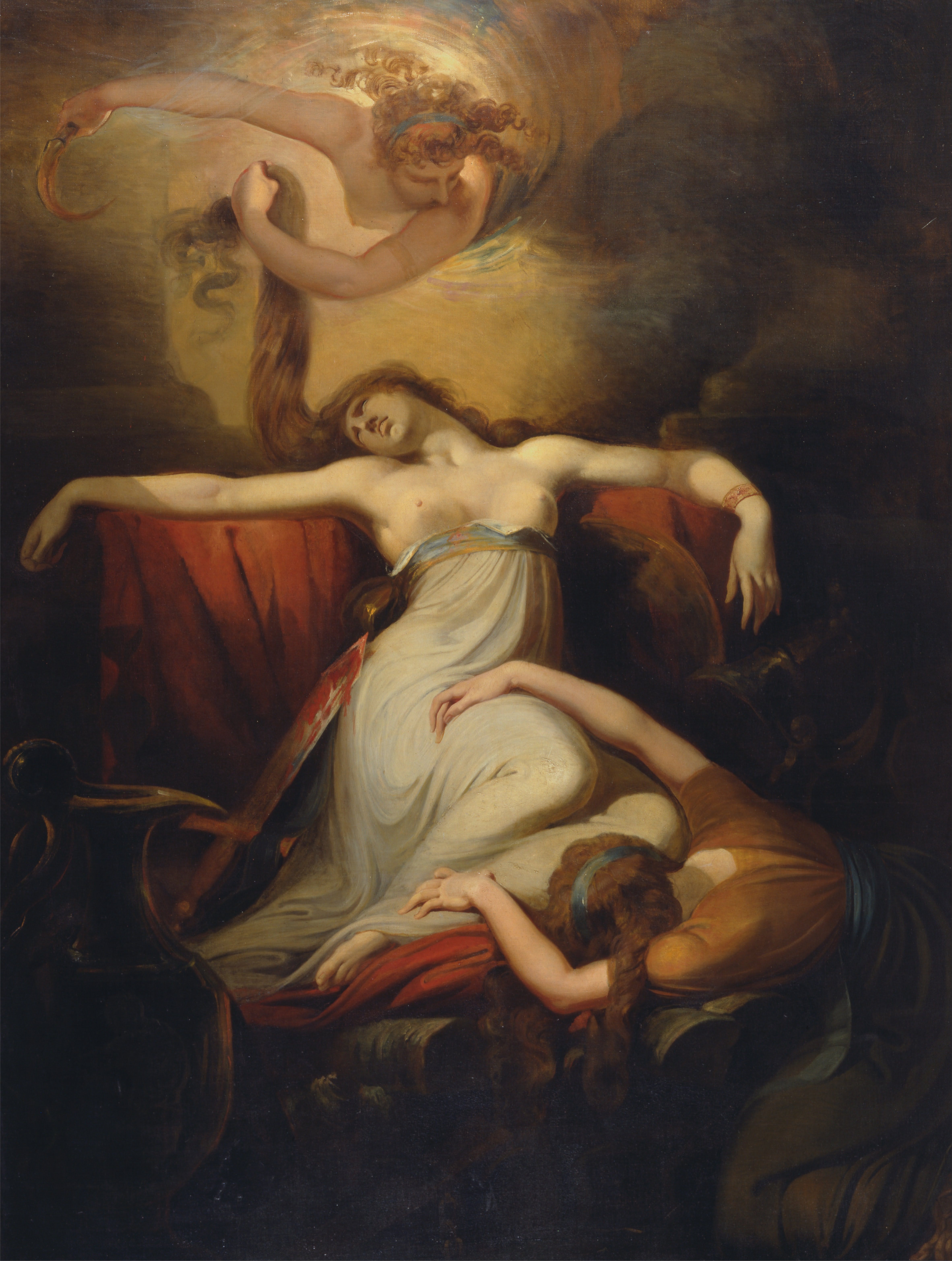
Why were the Romans and the societies that followed them so obsessed with Dido? It’s a good story, of course — a doomed romance, a scorned woman, a tragic death. But there’s more to it than that. As we saw last week, Carthage was destroyed physically and culturally by the Romans. A Roman city took the place of Carthage and utilized its splendid harbor. But the stories and art of the Carthaginians mostly disappeared.
Did Dido exist, either as a real person or a Carthaginian story, before the Romans adopted her for their own purposes? The best historians can do is to say “maybe.” There may have been a founding queen of Carthage (who came from Tyre in the Levant). She was probably named Elishat, or Elissa in Latin; Dido was a name given to her later; it likely meant “traveler.”
An old story about her circulated in ancient times. In it, she and her brother are heirs to the throne of Tyre. Her brother, Pygmalion (or P‘mytn in Carthaginian), kills her husband. She flees with supporters and eventually founds a promising city at Carthage. There are several versions of what happens next. In some, she has her deadly dalliance with Aeneas. In others, she kills herself out of devotion to her late husband, to avoid having to marry another man.
After the Punic Wars, the Romans seemed to have a strange fascination with the Carthaginians, and with Dido in particular. Why? Perhaps because she came to represent Carthage itself, and the Romans had put the Punic Wars at the center of their imperial story. Dido’s curse and tragic fate entangled Rome and Carthage from the very beginning and prefigured the Roman destruction of the North African city.
Carthage had been Rome’s greatest rival and sternest test. It was, in many ways, a mirror and a might-have-been for the Romans. Some authors, like Sallust, thought that the loss of this competitor was tragic and blamed the absence of Carthage for the decline of the Roman Republic. Others thought that the destruction of Carthage revealed something overly cruel about Roman society; the story was that even Scipio Africanus, the conqueror of the city, wept as Carthage burned.
Even Roman depictions of Hannibal, Carthage’s greatest general, reveal as much about the Romans as they do about Hannibal himself. Did Roman authors begrudgingly respect Hannibal because of his prowess, or did they celebrate him because defeating him made Rome seem greater?
Later societies, as we have seen, continued to look back to the Punic Wars as a reference. When Holy Roman Emperor Charles V defeated the Ottomans in North Africa, he consciously cast himself as a new Scipio, defeating a new Carthage. You can see the ruins of Carthage behind him in this triptych rather than the modern city he conquered:
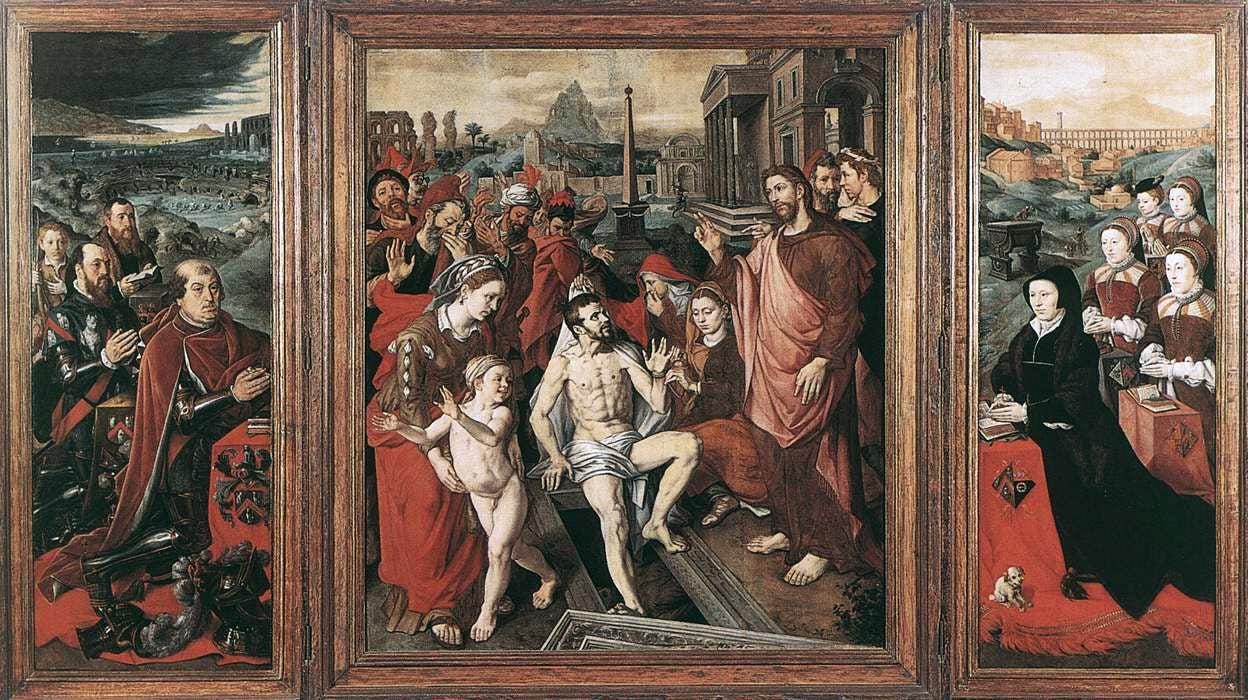
English people compared the three wars between the British and the Dutch in the 1600s to the Punic Wars, too, with the Dutch as the Carthaginians. Christopher Marlowe wrote a play about Dido, portraying her as a tough monarch who could control the men of her court — a clear analogue to Queen Elizabeth, whom the play was meant to honor.
Early modern artists focused quite a bit on depicting the big moments of the Punic Wars, especially the Second War:
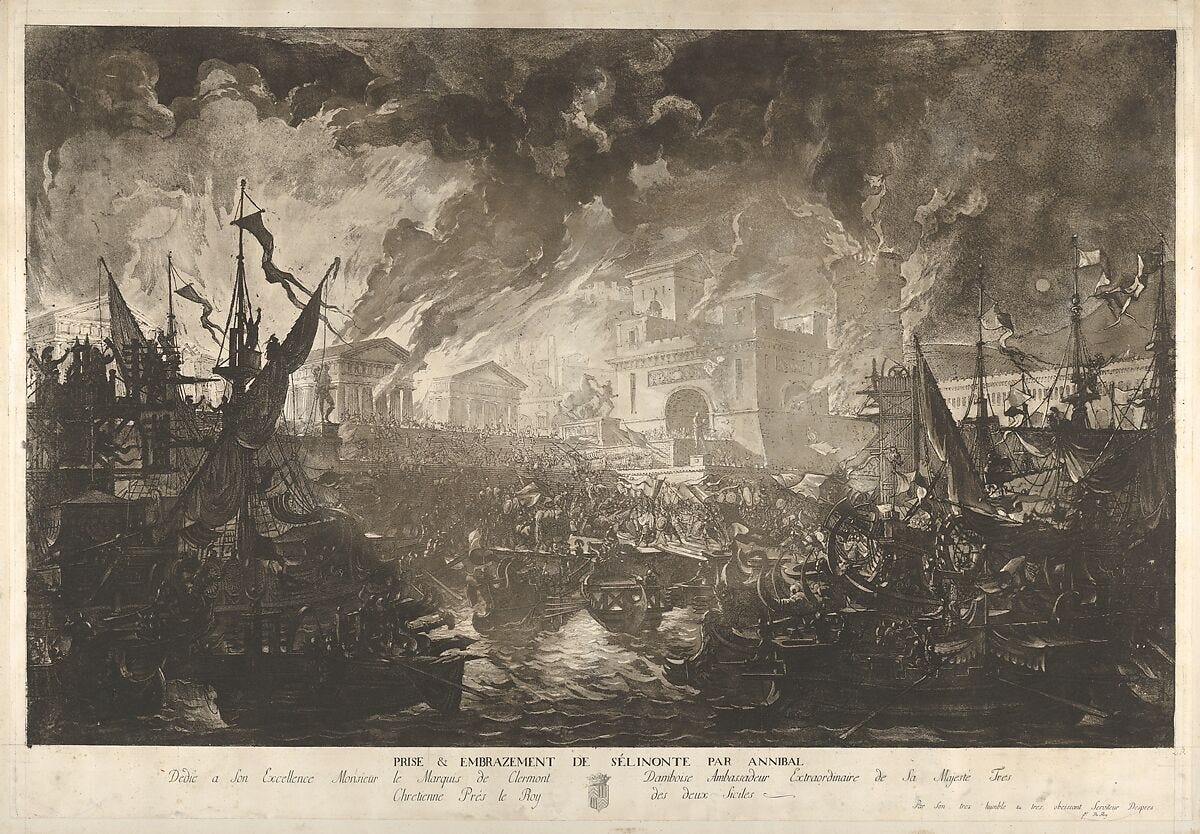
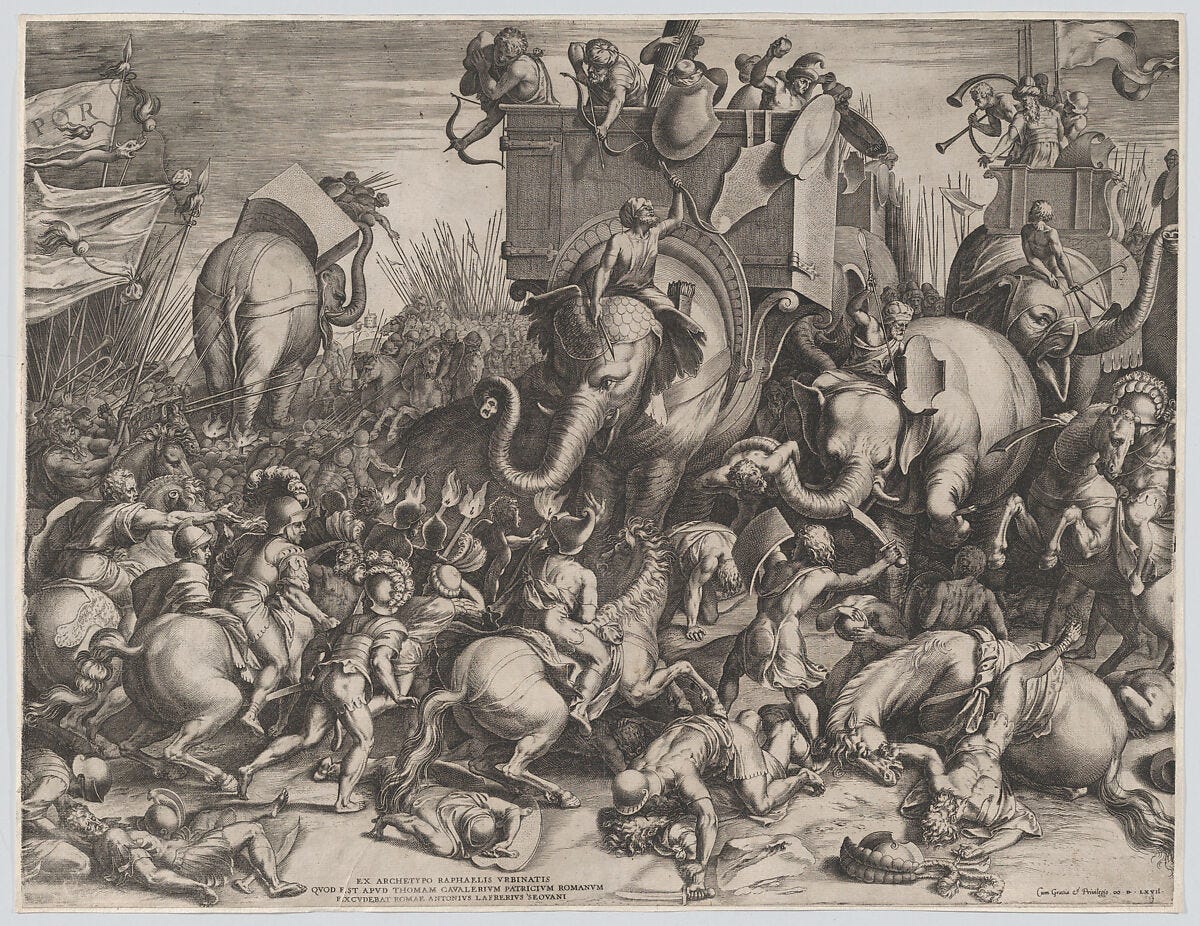
The example of Carthage’s defeat was so powerful that, even in the 20th century, John Maynard Keynes lamented the “Carthaginian peace” that the Allies had imposed on Germany.
How much of what we’ve discussed above is really true to the history of Carthage? It’s hard to say. The Romans and later European societies took the legacy of this once-great empire and molded it to their own purposes. The real Carthage faded away, replaced by the version of Carthage most useful to these later societies.
But little bits of the old Carthage still peeked out. In the 1870s, archaeologists started to find inscriptions in North Africa that contained Latin and Neopunic (a version of the old Carthaginian language) side by side.
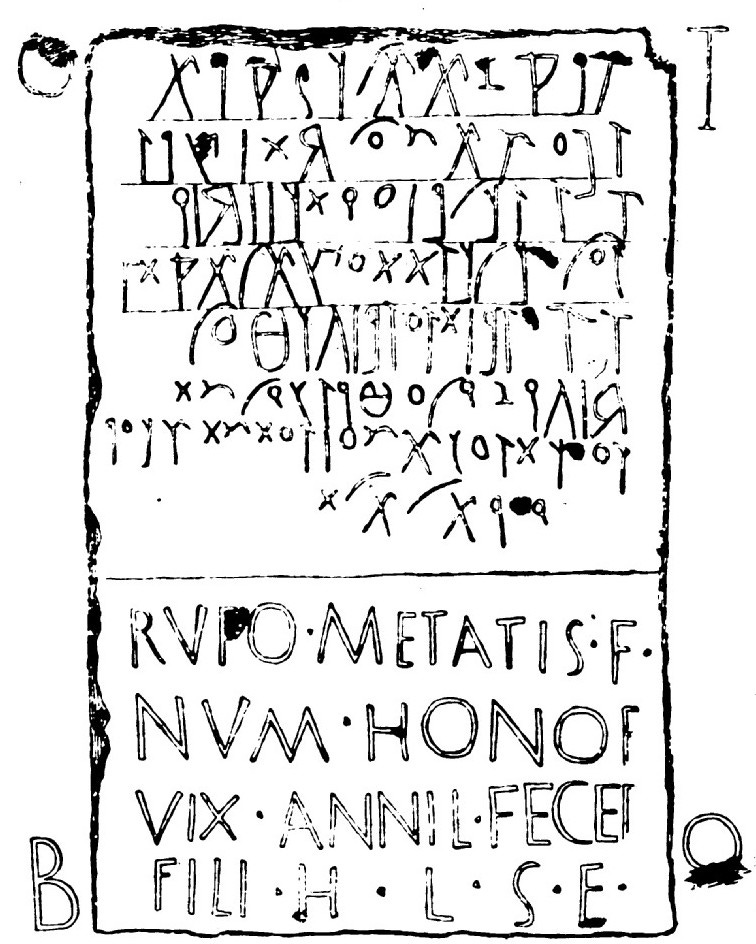
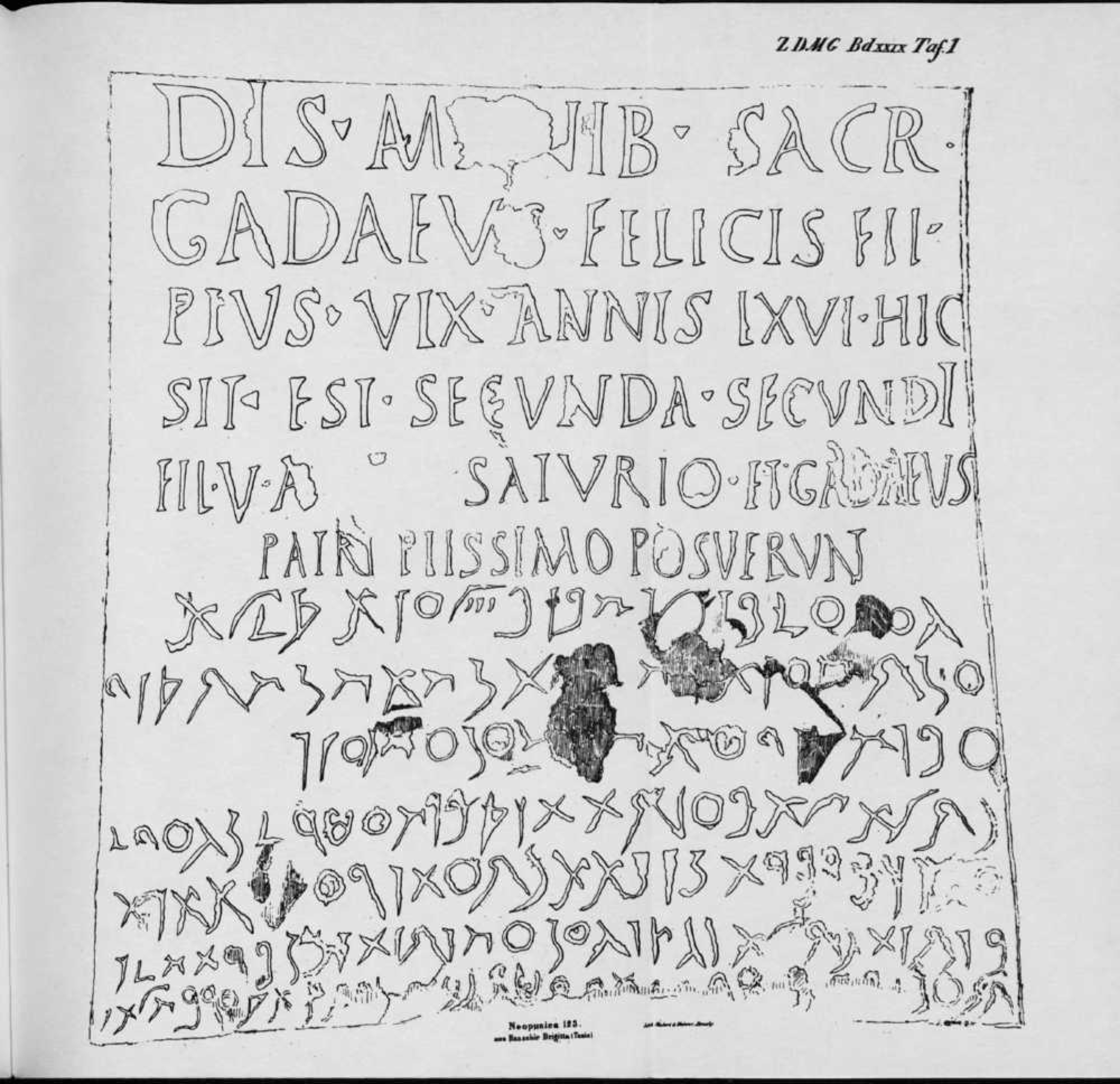


These show us that Carthaginian culture still existed after the Roman conquest, only to be slowly assimilated into Roman culture. Augustine of Hippo wrote in the early 400s CE — more than 500 years after the fall of Carthage that some of the old culture was still alive:
And if the Punic language is rejected by you, you virtually deny what has been admitted by most learned men, that many things have been wisely preserved from oblivion in books written in the Punic tongue. Nay, you ought even to be ashamed of having been born in the country in which the cradle of this language is still warm, i.e. in which this language was originally, and until very recently, the language of the people.
Eventually, however, the old language died out, replaced by Latin and then Arabic. And the old gods went away, too, replaced by Christian and then Muslim beliefs. Slowly, Carthage became less of a real place and more a mirror for self-regarding moderns.
This edition of the newsletter is free to all, but I count on the kindness of readers to keep it going. If you enjoyed reading this week’s edition, there are two ways to support my work:
You can subscribe as a free or paying member, which gets you access to the archives and members-only posts:
Or you can “buy me a coffee” by sending me a one-time or recurring payment:
Thanks for reading!